Founder Mode is a Tool, Not a Lifestyle

Founder Mode is a Tool, Not a Lifestyle

Founder mode is neither good nor bad. Hustle is neither noble nor toxic. The real question is simpler and harder. Is the urgency coming from the needs of the business, or from the wiring of the founder? I see this constantly. Founders who built successful companies and cannot break through the next level of growth. Not because they stopped working hard, but because they never stopped working the same way.

Read More

Urgency vs. Patience: The Best Leaders Learn When to Use Each

Urgency vs. Patience: The Best Leaders Learn When to Use Each

Entrepreneurs who build traction almost always skew urgent. That urgency is often what gets the company off the ground in the first place. At scale, that same instinct becomes disruptive. People struggle to understand priorities. Context switches constantly. Everything sounds like a crisis. Leaders start mistaking urgency for accountability and patience for disengagement. So founders hire someone to "balance" them. Often a COO, Chief of Staff, or operations leader who skews more patient. In theory, it's a purposeful pairing. In practice, it creates conflict.

Read More

Toxicity Isn't a Personality Problem. It's an Environmental One.

Toxicity Isn't a Personality Problem. It's an Environmental One.

Strong cultures don't eliminate toxicity entirely. They detect it early and contain it fast. They have antibodies: clear values, frequent feedback, leaders who stay engaged even under pressure. The goal isn't perfection. It's resilience. Whether a single bad apple spoils the barrel is one of the clearest indicators of leadership quality

Read More

Decision Paralysis is the New Corporate Crisis

Decision Paralysis is the New Corporate Crisis

Many leaders do the same thing with every hard decision. If you’re waiting for the right time, you’ll never act. There is no perfect information. There is no risk-free moment. There is no version of this that doesn’t require courage. Make the decision. Or don’t. But stop pretending indecision is neutral.

Read More

Perfectionism is Fear Disguised as Excellence

Perfectionism is Fear Disguised as Excellence

Most leaders don't call themselves perfectionists. They say they're being thorough. Setting the bar high. Still working to get it right. That's not always what's happening. Perfectionism rises as uncertainty rises. When leaders feel watched, judged, or exposed, perfection becomes the shield they grab.

Read More

Why Leaders Waffle (And How to Stop)

Why Leaders Waffle (And How to Stop)

When you waffle, you're not avoiding a choice. You're making one. You're choosing to stay stuck. You're choosing to slow your team. You're choosing to let opportunities expire. Most of the time, the facts that informed your original decision haven't changed. Only your emotions have. Make the decision or don't. Stop pretending indecision is neutral.

Read More

You Can't Lead People If You Can't See Yourself Clearly

You Can't Lead People If You Can't See Yourself Clearly

Research shows that when we see ourselves clearly, we’re more confident, more creative, and better decision-makers. We build stronger relationships, communicate more effectively, and lead more satisfied, higher-performing teams. Yet most leaders overestimate their self-awareness dramatically. Yet most leaders overestimate their self-awareness dramatically. In one study, 95% of people believed they were self-aware — but only 10 to 15% actually were.

Read More

Your Real Job as CEO: Chief Communicator

Your Real Job as CEO: Chief Communicator

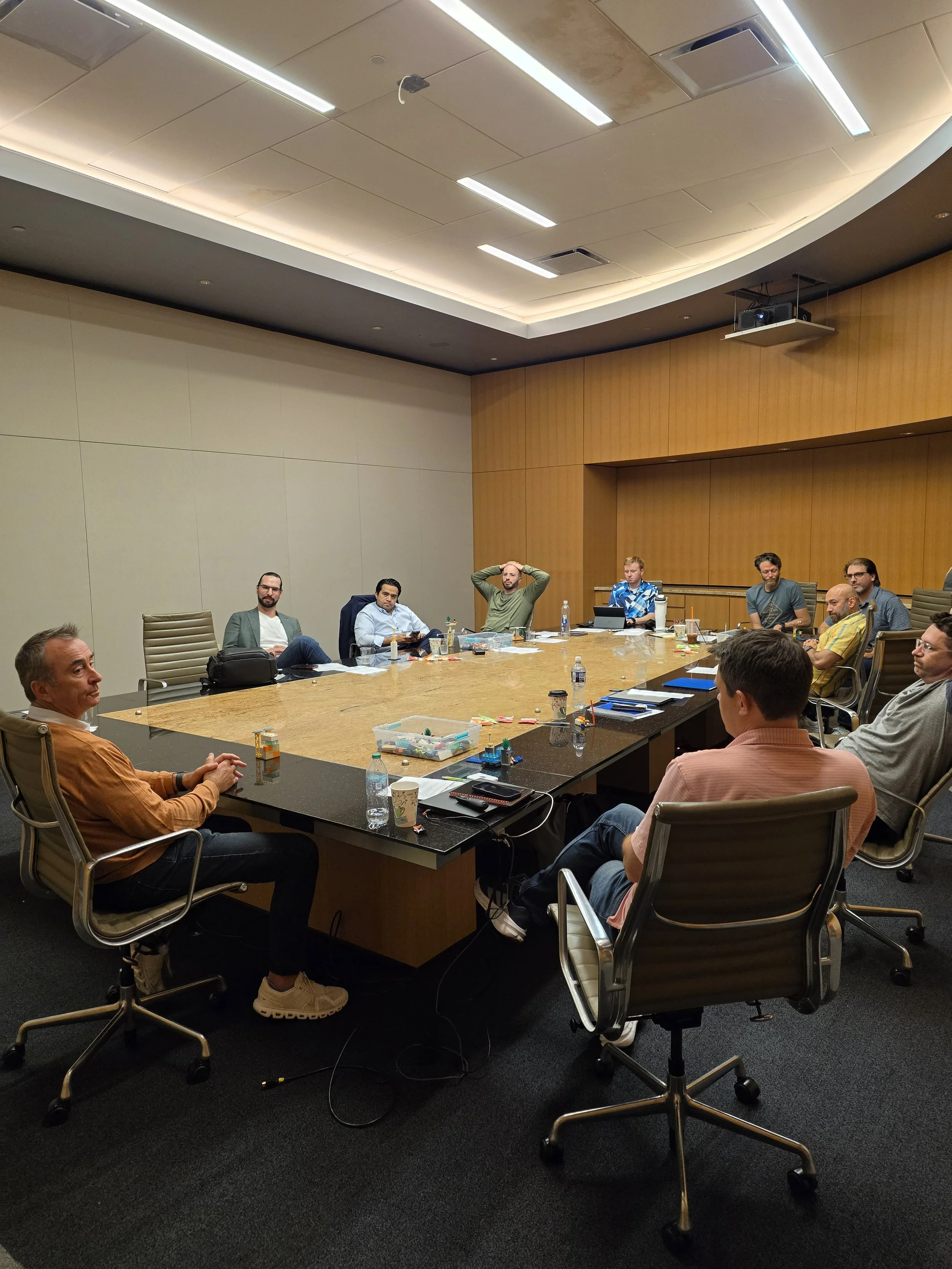
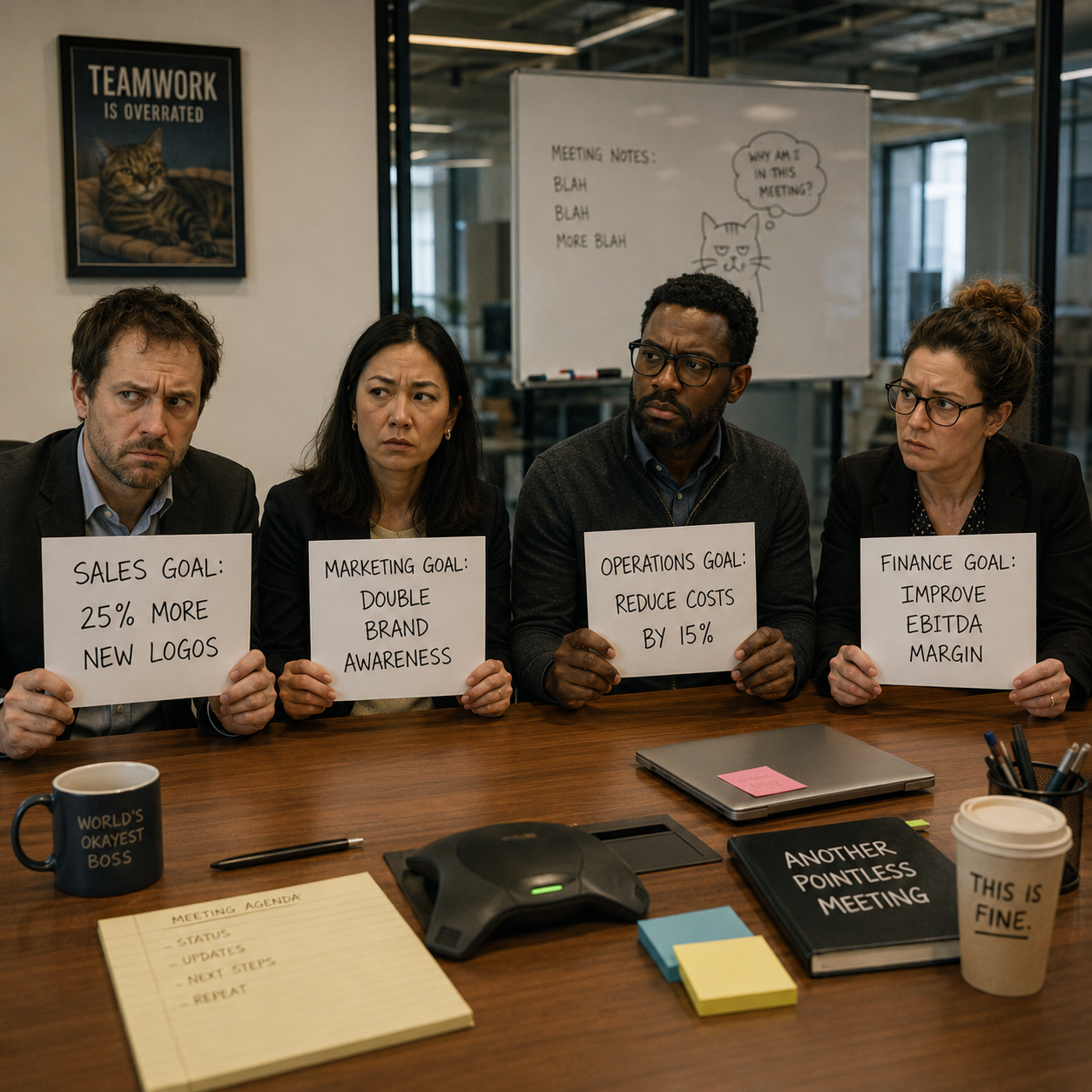
Most leaders hate meetings because they still think their real work is somewhere else. It’s not. The meeting is the work. It’s where coaching happens. Where friction gets surfaced and conflicts resolved. Where your values show up. If you’re phoning it in or constantly rescheduling, that’s the signal you’re sending to everyone else. You don’t have to love meetings. But you do have to learn how to lead inside them

Read More

How a CEO's ethics impacts the culture of the organization

How a CEO's ethics impacts the culture of the organization

Much of the tech talk recently is about AI, specifically ChatGPT (generating text) and Lensa AI (generating images). So, I gave ChatGPT a request to write an article on how a CEO's ethics impacts the culture of the organization. While it lacks my charm and occasional snark, nor does it include the storytelling I often do, can you tell that it was machine-generated?

Read More

Stop Hiring for Culture. It’s Harming Your Business.

Stop Hiring for Culture. It’s Harming Your Business.

How many times have you been in an interview process when someone asks the question: “Will they fit in here?” Is there an objective way to answer that? The question of fit is based on careful business choices. It’s based on emotion, and we all know hiring isn’t a decision we should make emotionally. And yet…so many business leaders do.

Read More

Should We Be Hiring a Chief People Officer?

Should We Be Hiring a Chief People Officer?

94% of senior executives think it’s important to focus on the growth and development of their HR executives so they’re ready to face the future. Of course, if you don’t have an HR executive on your team, you can’t focus on developing them. That’s the time to begin thinking about hiring a Chief People Officer.

Read More

Is an Interim Executive Right for Your Company?

Is an Interim Executive Right for Your Company?

An interim executive temporarily takes a management position in an organization to help the existing leadership solve problems and set the future, permanent leader up for success. Knowing whether an interim executive is right for your organization depends on your current needs and your assumptions about the future.

Read More

Performance Development Programs Don’t Work Unless You Follow Through

Performance Development Programs Don’t Work Unless You Follow Through

They do the performance development, and nothing changes. Why? Because a change in behavior requires practice, reinforcement, repetition. If leaders want to see real change when they implement performance development initiatives, they need to follow the three Cs of good management: Clarity, Communication, and Consistency.

Read More

Get Out of the Weeds: How to Balance the Day-to-Day with Overarching Strategy

Get Out of the Weeds: How to Balance the Day-to-Day with Overarching Strategy

One of the most frequent struggles I see with entrepreneurs and business owners is this tension between managing the day-to-day operations of the organization and focusing on overarching strategy. Many business owners who seek coaching or peer advisory boards know they’re not spending enough time on strategy, and they can’t figure out how to shift the balance. 

Read More

How to Build Cohesion After a Merger or Acquisition

How to Build Cohesion After a Merger or Acquisition

You might think that since companies spend upwards of $2 trillion every year on acquisitions, they’re a sure thing. The truth is, mergers and acquisitions fail at a rate of 70-90%. The biggest hurdle companies face after a merger or acquisition is the integration of teams. Few take the time and give the focus needed to build cohesive teams.

Read More