Decision Paralysis is the New Corporate Crisis
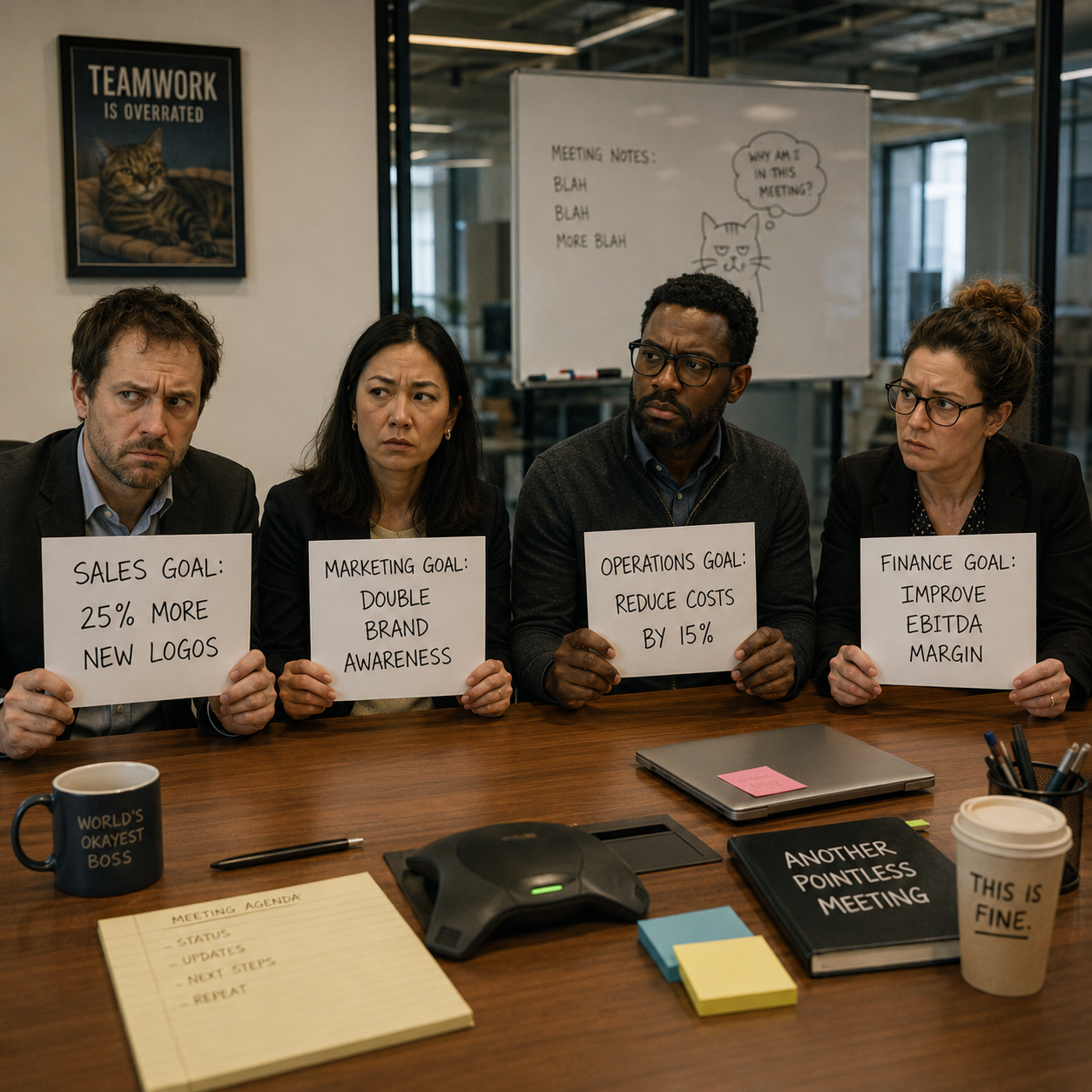
/There’s an epidemic of decision-avoidance in leadership right now.
Hires sit open for nine months.
Products stay “almost ready” for a year.
Strategies get revised instead of executed.
Leaders tell me they’re being thoughtful. They’re not. They’re stalling.
And stalling has a cost.
Why Leaders Are Stuck
A study of newly appointed executives found 57 percent said the decisions they faced were more complicated and difficult than they expected.
But complexity isn’t the core issue.
The core issue is that leaders are waiting for a set of conditions that will never exist:
perfect information
risk-free timing
certainty
If your decision requires perfect conditions, it’s already dead.
You cannot think your way into clarity. You can only move your way into it.
The Three Big Excuses Leaders Hide Behind
After decades of coaching leaders, most delayed decisions fall into one of three buckets.
“I need more information.”
Most of the time, you don’t.
You need courage.
This is status quo bias in business clothing: we default to what’s familiar because it feels safer than being wrong.
So leaders gather more opinions. Rebuild the spreadsheet. Run another model. Ask AI for one more answer.
It looks responsible. It feels prudent.
But your team doesn’t experience it as prudence. They experience it as hesitation.
Taking action with incomplete information is not a flaw in leadership. It is leadership.
“I keep rethinking it.”
No, you’re waffling.
A leader I worked with delayed replacing their CTO for almost a year. They knew early the role wasn’t working. They had the evidence. They had intuition.
Their problem wasn’t data.
It was the willingness to commit.
While they debated, underperformance continued. The team compensated. People burned out. Trust eroded. By the time the leader finally made the hire, nine months were gone and so was credibility.
The facts didn’t change.
Their emotions did.
“It’s not ready yet.”
It is.
You’re just scared to ship it.
A founder I know spent a year building a “perfect” product before talking to a single customer. When they finally launched, the market wanted something else entirely.
A year of work. Zero learning.
Perfectionism feels like quality control. It’s actually self-protection.
What Decision Avoidance Really Costs
Here’s what decision avoidance looks like when it gets expensive.
I had a client who resisted firing his head of sales for two years.
This person was an early hire. Many years with the company. A star performer who hit a rut, then a downward spiral. Coaching didn’t work. Support didn’t work. Rescuing didn’t work.
Worse, the salesperson became a poison apple.
He started doubting the CEO publicly. Questioning decisions. Infecting other people’s confidence in the company’s direction.
The CEO knew what needed to happen.
But he kept finding reasons not to do it:
the holidays are coming
morale is already low
what will clients think
what will the team think
loss of institutional knowledge
who could replace him
The CEO’s peer board finally put enough pressure on him that he acted.
Then the CEO called the salesperson’s clients to stabilize the transition.
They said: “Thank goodness. I couldn’t stand working with him.”
Two years of avoiding the decision.
Two years of team burnout.
Two years of erosion.
And when he finally acted, the dominant emotion was relief.
Every leader who finally makes the call they’ve been avoiding says the same thing:
“I should’ve done this sooner.”
The Pattern Beneath the Excuses
Decision avoidance isn’t one problem. It’s three problems wearing different masks.
“I need more data” is fear of being wrong.
“I’m reconsidering” is fear of commitment.
“It’s not ready” is fear of judgment.
Different excuses. Same root.
You’re treating uncertainty like a problem to solve.
It’s not.
Uncertainty is permanent now.
Your competitors aren’t waiting. And your team definitely isn’t getting stronger while you deliberate.
Three Practices That Work
The leaders who move fastest aren’t reckless. They’re structured and iterative.
Here are the practices that break the pattern:
Make the decision or kill it.
Set a deadline. Make the call by that date or explicitly decide not to do it. Limbo is corrosive.
Define success before you begin.
Vague goals create infinite delay.
“Hire someone” isn’t a goal. “Hire someone who can scale ops to $10M” is.
“Launch” isn’t a goal. “Get 100 customers using it in 90 days” is.
Act small before acting big.
Pilot it. Contract before you hire. Soft-launch before you scale. Make a series of smaller decisions and you’ll make them faster.
There is No Good Time
When I was younger, I asked my father: When’s a good time to have kids?
He said, “If you’re waiting for a good time to have kids, you’ll never have kids. There’s never a good time.”
He was right.
And leaders do the same thing with every hard decision.
If you’re waiting for the right time, you’ll never act.
There is no perfect information.
There is no risk-free moment.
There is no version of this that doesn’t require courage.
Make the decision.
Or don’t.
But stop pretending indecision is neutral.
It isn’t.
And 2026 won’t wait for you to feel ready.