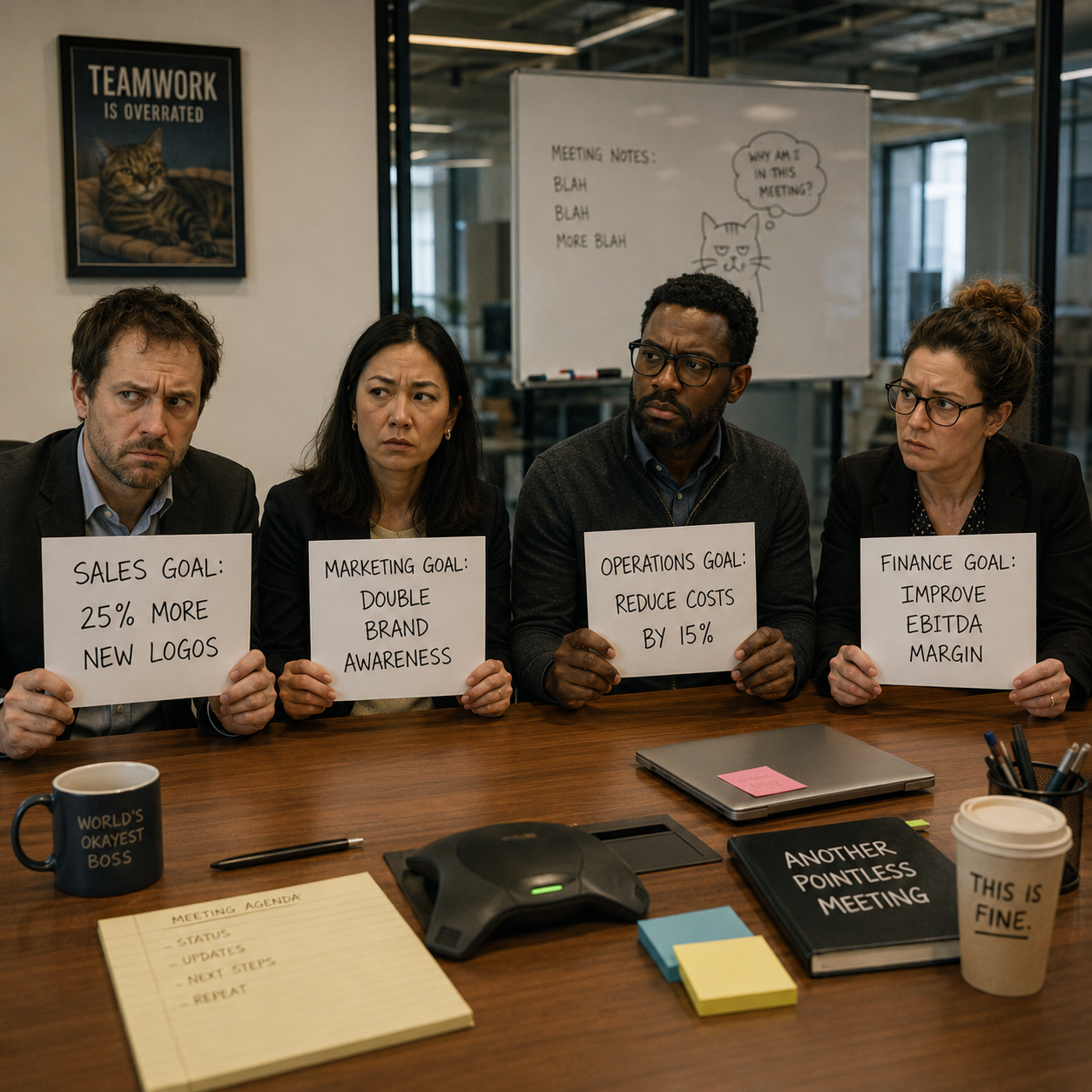
The Most Dangerous Cost in Leadership Isn't Money. It's Commitment to the Past.
/A leadership team budgets $500K for a project expected to take six months by a consulting company.
Six months in, they have spent $1M and it’s only halfway done. The forecast shows $2M total by year end and months behind schedule.
Everyone assumes the leader will continue the project. Too much has already been invested. Walking away might be admitting failure.
The leader pulls the plug.
The reaction is immediate. "We're walking away from a million-dollar investment?"
The leader responds, "I'm concerned we're going to walk away from a two-million-dollar loss" after another six months.
A year later, the CEO of the outsourced firm tried to hire him. His reason was simple. He respected a leader who was not afraid to make a difficult decision and walk away from something he had already invested heavily in.
Most leaders cannot do that. Not because they do not understand the math. Because emotionally, walking away from a past loss feels worse than risking a future one.
The psychology that hijacks good judgment
Psychologists call this loss aversion. People feel losses more intensely than equivalent gains. A million-dollar loss feels catastrophic in a way a potential million-dollar gain never will.
That is why leaders keep pouring resources into failing projects. The emotional cost of admitting the loss is heavier than the financial cost of continuing.
Then escalation of commitment takes over. The more you have invested, the harder it becomes to stop.
Leaders invest additional time, money, and credibility not to improve outcomes but to justify past decisions.
Cognitive dissonance compounds the problem. When a leader suspects a decision is not working, they face a choice: admit the mistake, or rationalize it by committing more resources. Most choose the second option. Not because it’s logical. Because admitting the mistake creates psychological discomfort that feels worse than the financial loss.
At a poker table, the dealer eventually ends the hand. In leadership, no one tells you when to stop. You have to decide.
A simple test helps. If you were not already invested, would you start this today with what you know now? If the answer is no, you are not making a forward-looking decision. You are defending the past.
Why founders are especially vulnerable
Founders tie identity to decisions in ways other leaders do not. When you build something from nothing, strategy feels personal. A product direction is not just a business choice. It is your judgment. A hire is not just staffing. It is your call.
Early in a company's life, stubbornness is an advantage. Founders succeed because they push through doubt and commit to paths that look irrational to outsiders. That same quality becomes a liability later. The stubbornness that gets you to product-market fit can keep you funding a failing initiative long after the evidence turns.
There is also a financial layer. When it is your money, not a corporation's, the instinct to recover losses intensifies. Risk takers are comfortable with uncertainty, but that comfort can drift into a gambler's mindset. One more quarter. One more hire. One more release. The belief that the next move will justify the previous ones.
This fear is amplified by the scrutiny leaders operate under. The pressure to appear decisive and effective is constant. Admitting a failed initiative does not just mean acknowledging a bad bet. It means potentially damaging your reputation, your career trajectory, your standing with the board. So leaders double down. Not because the evidence supports it. Because backing out feels like professional suicide.
What it looks like when leaders are stuck
The language gives it away.
"We can't stop now. We've invested too much."
"We already told the board this was the direction."
"We need to show consistency."
"We owe it to the team to finish."
These sound principled. They are often emotional defenses.
I worked with a client who planned to fire someone multiple times. Each time, new reasons appeared to wait. The situation did not improve. More months paying salary. Problems compounding.
The delay came from the discomfort of making the decision final.
I have seen leaders hold onto strategies that stopped working years earlier because pivoting would mean admitting the original plan was wrong. I have watched executives fund initiatives everyone knew were failing because stopping would require explaining why they started.
It shows up with employees. Leaders invest months coaching someone who is not improving. They put them on a performance plan. The person does not fail outright but does not succeed either. So the leader keeps them. The plan burns time and drains the team.
It shows up with customers. A client relationship turns unproductive. The team keeps it anyway because of the investment already made. The project gets worse. The customer leaves anyway. The leader protected the past instead of the future.
The pattern is predictable. Leaders are not unclear about the facts. They are paralyzed by what the facts say about them.
What staying costs you
Persisting with failing initiatives does more than waste money. It drains teams. People working on projects they know are not working lose energy and trust. Over time, that turns into burnout and disengagement.
The best people leave first because they more readily have options.
There is also opportunity cost. Every month spent defending a failing decision is a month not spent on something that could work. Resources locked into the past prevent investment in the future.
Sunk cost does not just preserve bad investments. It blocks good ones.
The shift from defending to learning
The most adaptive leaders treat decisions as hypotheses. They commit, gather data, and update. When the hypothesis does not hold, they change direction without attaching identity to the original call.
That sounds simple. It is psychologically difficult.
It requires separating your worth from your decisions. Being wrong about a strategy does not make you a bad leader. It means you had incomplete information and adjusted when reality changed.
One practical discipline helps. Set exit criteria at the beginning. Define the conditions under which you will continue, pivot, or stop. Tie those conditions to outcomes, not past investment. In other words, boundaries.
If we do not hit X by this date, we stop. If customer adoption does not reach this level, we pivot. If we cannot staff this properly by this quarter, we walk away.
When you set criteria early, the decision later becomes mechanical. You are not debating whether to quit. You are following the plan you set when your judgment was clearest.
Why quitting can be strategic
Quitting early reduces future cost. It signals judgment, not weakness. Teams respect leaders who pivot more than leaders who double down on losing bets.
This applies beyond projects. It applies to employees who are not improving, vendors who are not delivering, and customers who are not a fit. And while some leaders are comfortable firing vendors, we know they are near universally less comfortable firing customers. Sometimes walking away from a misaligned relationship is the most strategic decision available.
When that outsourced firm CEO tried to hire the leader who shut down the project, he did not remember the project details. He remembered the decision. He remembered a leader who was willing to stop when the numbers no longer made sense.
Leadership is not about finishing everything you start. It is about finishing what still matters.
What are you protecting
Go back to that project.
The team focused on what had already been spent. The leader focused on what would be spent next. One perspective protected the past. The other protected the future.
Ask yourself a direct question. Are you protecting the business or protecting the version of yourself who made the decision?
Sunk cost rarely drains budgets first. It drains judgment.