Nothing Changes Until It Hurts Enough
/A large corporation I know hired one of the big consulting firms to fix a profitability problem.
They didn’t bring them in when margins started slipping. They brought them in when they had no other choice.
By then, the answer was expensive and the problem was obvious. Their expense line had been tracking their revenue line for years. Revenue kept climbing. Profits never moved. Nobody had stopped to ask why.
They had always thought things would improve with scale.
A former colleague had considered bringing me in to look at the same issue before that point. I believed it was addressable. They delayed, and then went with the bigger firm.
That’s not why I remember the story.
I remember it because by the time they called anyone, the problem had been visible for a long time. They simply lived with it.
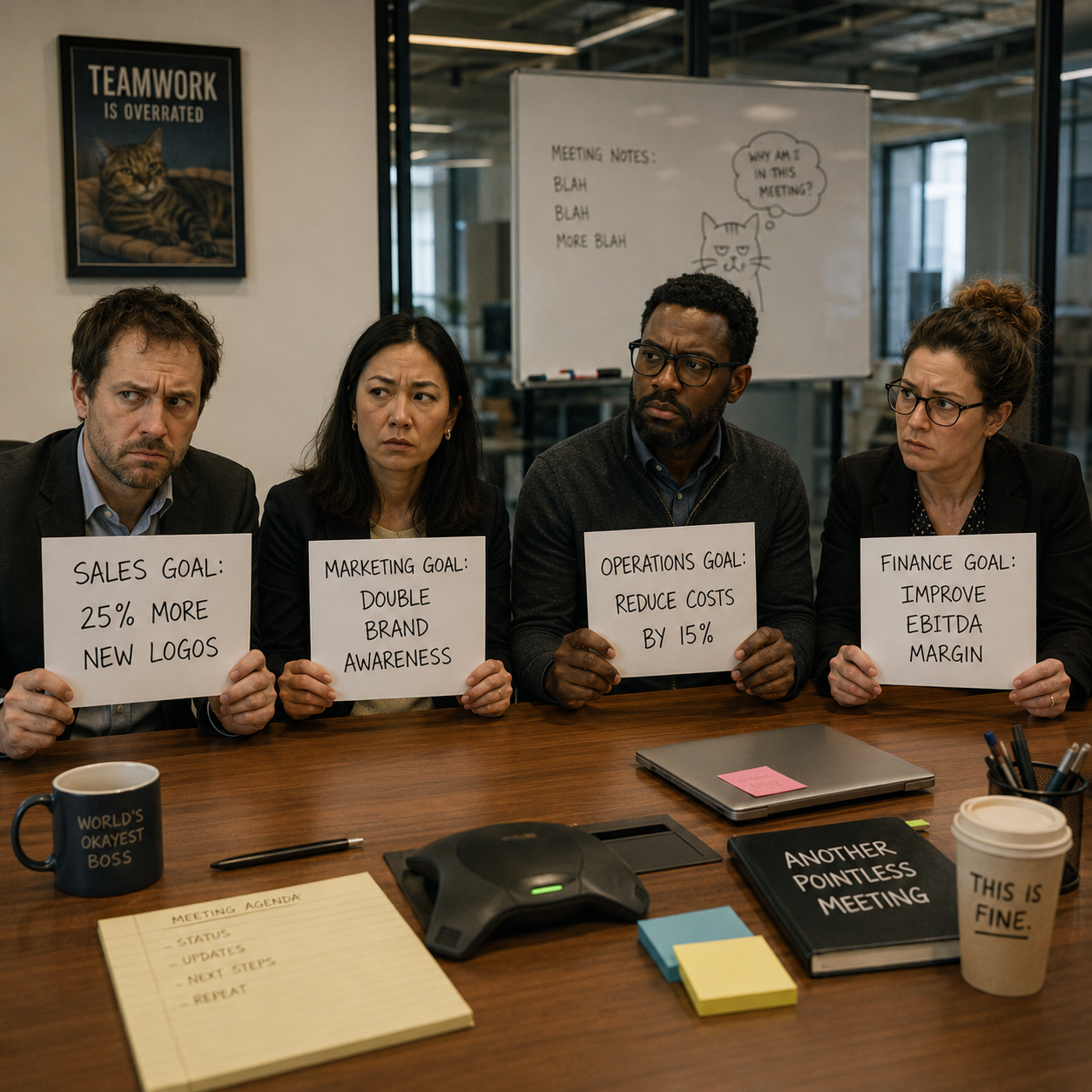
I see this constantly. Not just in large corporations, but in startups and growth-stage businesses doing everything right on paper until suddenly they aren’t. The numbers look fine until they don’t. And by the time someone calls, they’ve been “fine” for a long time.
Nothing Breaks All at Once
After nearly fifteen years of advising founders and leaders, I’ve found two things that consistently bring them to a breaking point.
The first is profitability. Not growth. Profitability.
Early on, growth feels like the goal. Revenue is climbing, you’re winning deals, and the numbers going up feel like evidence you’re doing something right. But at some point, the expense line starts tracking the revenue line and the gap never widens.
That’s when I get the call.
What I almost always find underneath it is the same thing: no one ever mapped the economics. There’s no clear picture of which customers are actually profitable. The business was built on whoever would buy.
I had a client who built software for gyms. He started with local studios, grew into regional chains, and eventually landed a large national brand. Different acquisition costs, different price points, different service demands, very different overhead.
On the surface, the business was growing. But when we broke profitability out by customer type, which was four distinct cohorts, the picture changed completely. Some of the markets he had worked hardest to win were losing him money.
The fix wasn’t complicated. Focus here, not there. But getting there required stepping outside the business and asking a question he’d never had time to ask.
He could have seen it earlier. He was too busy running to look.
The Second Problem Is Never the Second Problem
The other breaking point is people.
And it’s almost always the tip of the iceberg.
By the time a leader says, “I have the wrong people,” it’s been building for a long time. What looks like a team problem is usually a systems problem. What looks like a hiring problem is usually a leadership problem.
There’s something I say to clients in this situation, and they don’t love hearing it: the fish rots from the head.
You can’t change other people. You can only change the environment you create: your expectations, your communication, your consistency.
So when a leader tells me they want more accountability, my first question is what they’re doing that makes accountability harder than it needs to be.
If we don’t answer that, we’re just replacing people without fixing the system. The next person will struggle the same way.
This Isn’t Blindness. It’s Tolerance.
Here’s what I’ve noticed about the leaders who wait.
They’re not unaware. They’re not ignoring obvious problems. They see them. They just learn to live with them.
Margins tightening a little each quarter. A team dynamic that feels slightly off. A process that’s inefficient, but still works.
None of it is broken enough to force action.
So it waits.
And while it waits, it becomes the new normal.
Addressing the problem means owning the problem. And owning the problem often means owning your role in it.
The founder with the wrong people usually hired them. The leader whose team lacks accountability usually built that culture.
Sitting with “this is manageable” is easier than sitting with, “I need to look at my own decisions here.”
So most leaders don’t.
Not until manageable becomes a crisis.
Why Leaders Stay in Reaction Mode
Most founders start in what Stephen Covey called Quadrant One. Everything is urgent. Everything is important. You sell to whoever will buy, hire whoever seems right, fix whatever’s in front of you.
That’s not a character flaw. That’s what building something looks like.
But most leaders never fully leave that mode.
Strategic thinking, planning, and building systems all matter. We know they matter. We just don’t feel the cost of skipping them yet. Quadrant Two, important and not urgent.
So they get pushed. Again and again. Until something forces the shift.
Pain Teaches Faster Than Advice
Leadership development works the same way.
You can read about it. You can hear about it from peers. You can be told exactly what to do.
It rarely sticks until you’ve felt the consequence of not doing it.
You don’t change because it’s a good idea. You change because something broke and you don’t want to go through that again.
Basically, learning lessons the “hard way.”
What I Do About It
I never beat anyone up for decisions made in the past. The context was different. The constraints were different. The business was a different size.
Meaning no regrets.
What matters is what changes now.
The value of an advisor, coach, peer board, or any outside perspective isn’t just knowledge.
It’s interruption.
Breaking the cycle with signals and diligence.
Someone who can see what you’ve adapted to so gradually you stopped seeing it. Someone who asks the question you’ve been too close to ask yourself.
Bottom Line
Most leaders don’t miss the signs.
They learn to live with them.
Until they can’t.
And by then, the cost of fixing it is always higher than it needed to be.
The good news is it’s almost never too late to fix it.
The better move is to act before it becomes urgent. But that requires making a decision about something that doesn’t feel urgent yet.
And that’s exactly why most people don’t.