Your Team Doesn’t Have to Agree With You. They Do Have to Understand You.
/One of my bosses started making bad decisions.
At least that’s what we thought.
It was a company of about 100 people and 8-figure revenue. He had always been a little passive aggressive. Suddenly he was just aggressive.
In one leadership meeting he pushed us into agreeing to things none of us thought were right. We went along with it. I couldn’t figure out what had changed.
Afterward I pulled him aside and asked what was going on.
“You guys just don’t understand,” he said.
Then he told me something he hadn’t told the rest of the team.
The company wasn’t failing. We had made a lot of investments, and the runway was getting short. So short that he had put his own money into the last payroll.
He was scared.
I asked why he hadn’t told us.
“Because then everybody would be afraid for their job.”
I told him he had it backward. We were already losing confidence in him. We didn’t understand his decisions, and his behavior was making it worse. If he told us what was happening, we could help.
He told the team. We started optimizing for cash, and the company got its footing back.
Nothing about the business got healthier when he told us. We simply stopped working against a problem we didn’t know existed.
He thought he was protecting our confidence by keeping his fear to himself.
He was losing it.
Every Miss Costs You Something
Think of confidence as a bank account. Every result you deliver is a deposit or a withdrawal. Withdrawals are fine as long as you’ve been making deposits.
Plans fall short for three reasons. Bad assumptions. Bad execution. Outside forces. Each one costs you. Bad assumptions mean you got it wrong. Bad execution means you messed up. Outside forces invite a different question. Didn’t you see it coming?
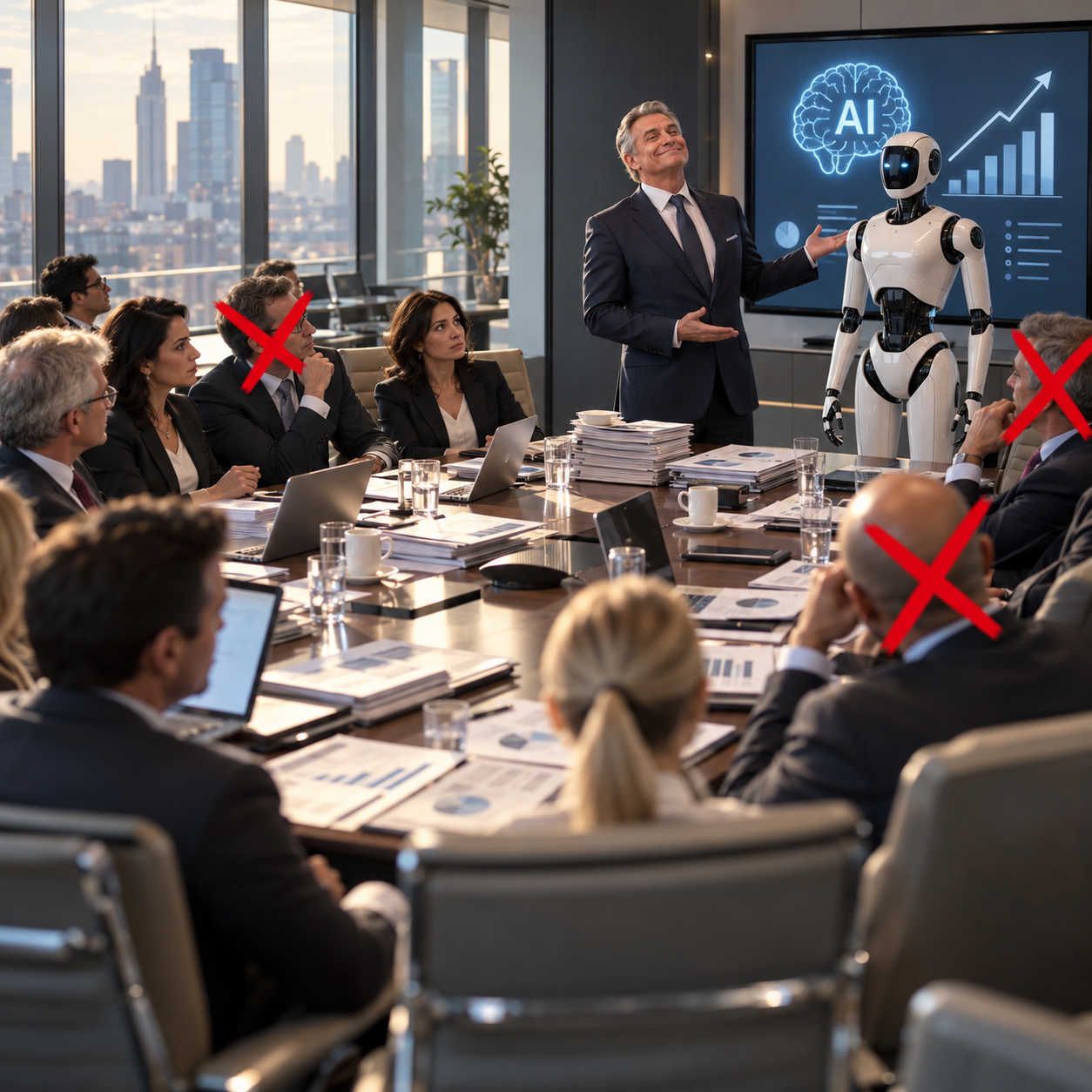
AI is the favorite outside force right now. Our market is soft. Prices are falling. Everyone says AI. Some of that is real. Some of it is cover. Your team will wonder which.
Revenue drops. A launch misses. A good person leaves. The CEO changes direction and doesn’t say why. A layoff happens, and in one study of 146 companies confidence in leadership fell about 10 points afterward. Every one of these makes people wonder whether leadership knows what it’s doing.
You’ll Be the Last to Know
Some signals are obvious. Something didn’t go the way you planned.
The quieter ones show up in behavior. Gossip goes up. Back-channeling goes up. People start protecting their position instead of the business. Good things happen less. Nobody shows up to the weekly happy hour anymore.
Don’t over-read it. Someone who smiles, does the work, and leaves at 4:30 may just be honoring the transaction. Look for patterns.
The harder problem is that people put on a different face for the CEO. Why would you be candid with someone whose judgment you’re questioning, especially if you’re worried about your own job?
I had it easier at CDNOW. The company was big enough, and the culture open enough, that if people were thinking something and I wasn’t hearing it directly, someone told me. Most CEOs don’t have that. Build it. Find the managers who will be your ears on the street. Then ask directly, in a way that makes it safe to answer. I wrote about why your team can’t tell you they’re struggling. It applies here.
If the only feedback you get is positive, people may have learned that’s all you want.
They Don’t Have the Information You Have
I coach whole leadership teams, and I hear the same sentence all the time. “You don’t understand why he made that decision. It’s the wrong decision.”
When people don’t have an explanation, they come up with their own. And if the decision looks wrong, the explanation they invent usually isn’t flattering.
I sometimes explain what the CEO could have explained to give the team context. I might ask how much of the business the founder owns. All of it? Most of it? I ask whose money is behind the financial obligations or even debt. The CEO’s, personally. Now sit in that seat. They’re afraid of losing everything. You’re afraid of losing your job.
Both fears are real. You’re each looking at the same situation with different information and different things at risk.
Most CEOs never share that view. They think transparency will cost them more than silence. Cash is tight, so they say nothing. Profits are high, so they say nothing, because then people will know how much they make.
The team already knows. They’ve seen the house. They’ve seen the car.
What they can’t do is make good decisions with information they don’t have. A decision they don’t understand looks like a bad decision. Maybe they disagree once they have the context. That’s fine. At least they’re arguing about the real problem.
Say It Plainly. Then Decide.
The fix is simpler than most CEOs expect. Explain your decisions. Share what you know. When you get something wrong, say so. “We got that wrong. That’s on me. Here’s what I’ll do differently.”
CEOs worry that makes them look weak or hands someone a weapon. It almost never does.
People usually already know something went wrong. What they’re trying to figure out is whether you know it, too.
Openness isn’t indecision, and it isn’t leading by consensus. In my first CEO job I studied servant leadership. I even brought in the man who wrote the book to give my team a pep talk. It was a terrible pep talk. He recited his book, word for word.
The idea sounds great. Take care of people and they’ll follow. It isn’t enough. What do you do about conflict? What do you do about someone who isn’t performing? At some point you run out of inspiration and have to act.
Leadership is a mix. Servant, collaborator, consultative, benevolent dictator. You can’t be one of them all the time. A company in crisis often needs the dictator. (Benevolent. I want to be clear about that.) The team has spent weeks talking. There are 40 opinions at the table. They want someone to decide so they can move forward.
Your team doesn’t need to believe you’ll always make the right call. They need to believe you see the problem clearly and will own what happens next.
Back to the Payroll
My boss thought he was protecting us.
We didn’t need protecting.
We needed him to trust us.